
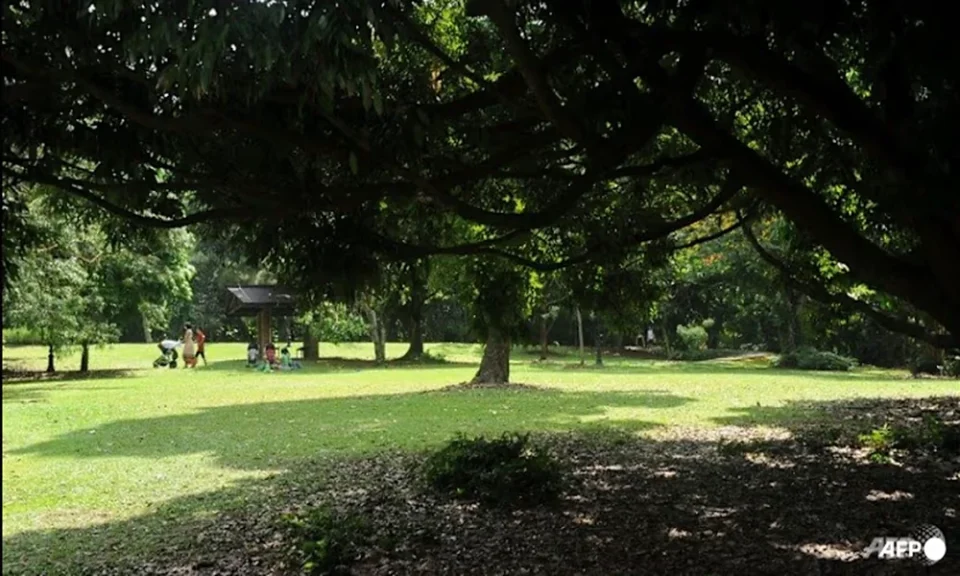
The oldest trees in Singapore’s urban canopy are not there by accident. They are there because somebody made decisions about care, pruning, and protection that allowed them to survive decades of construction, storms, and the competing pressures of a rapidly developing city. Tree maintenance in Singapore is what keeps trees standing for the next generation of residents, not just the current one.
Singapore’s National Parks Board manages a tree register of significant specimens, many of which are over a century old. These trees persist because they have been assessed, maintained, and protected as part of a deliberate programme. The same principle, applied at the level of private property, is what determines whether a tree that was planted twenty years ago remains a landscape asset or becomes a structural hazard requiring emergency removal.
The Safety Dimension in Singapore’s Climate
Singapore’s thunderstorm frequency is among the highest in the world. The island experiences approximately one hundred and sixty-five thunderstorm days per year. Each of those events brings the potential for wind loading on trees that reveals structural weaknesses developed through years of inadequate maintenance.
Dead branches fail first. Secondary scaffold branches with included bark at the attachment point are the next to go. Trees with co-dominant stems, where two or more stems of equal diameter compete for the same space, develop attachment points that are inherently weaker than a single dominant leader. All of these conditions are identifiable during a tree assessment and manageable through targeted pruning before they become a storm risk.
Tree maintenance programmes in Singapore typically include an annual visual assessment alongside the physical work of pruning and crown management. This assessment is what transforms maintenance from reactive patch-up work into genuine long-term tree management.
What Long-Term Tree Management Looks Like
Long-term tree care is cumulative. A tree that has been consistently pruned to a good structural form every two years is a fundamentally different organism from one that receives heavy reduction every ten years when the canopy has become too large to ignore. The consistently maintained tree builds sound structure progressively. The intermittently pruned tree is subjected to large wounding events that create decay entry points and require years of recovery between interventions.
Crown reduction performed correctly removes no more than twenty-five to thirty percent of the live canopy at any single visit. This threshold limits stress to the root system and allows the tree to recover its photosynthetic capacity within one growing season. Reductions beyond this threshold weaken the tree and should only be used in specific circumstances, not as a general approach to managing an overgrown canopy.
Root Zone Care in Urban Settings
The root zone is where tree health ultimately begins and ends. In Singapore’s urban environment, roots compete with paving, underground services, building foundations, and compacted soils that restrict gas exchange and water infiltration. Many tree health problems visible above ground originate in root zone stress that has been building for years.
Mulching the area around the base of a tree, from approximately one metre out to the drip line, significantly reduces soil compaction, moderates soil temperature, retains moisture, and suppresses weed competition. This single practice does more for long-term tree health in Singapore’s conditions than most above-ground interventions.
Root barriers, properly installed during construction or paving projects near existing trees, protect the root zone from physical damage and provide the growing space the tree needs to remain stable and healthy. Trees managed well at the root zone require less corrective pruning above ground because they are not under chronic stress.
The Regulatory Context for Tree Management in Singapore
Certain trees in Singapore are protected under the Parks and Trees Act regardless of whether they sit in a public or private space. A protected tree cannot be pruned, trimmed, or removed without notification to or approval from the National Parks Board. This applies to trees above specific girth thresholds within gazetted areas.
For property owners with mature trees, understanding which trees on their land carry protected status is an important part of planning any maintenance programme. A qualified tree care provider operating in Singapore will assess the regulatory status of trees before proposing any work and will handle any required notifications or applications as part of the service.
Working within the framework set by the Parks and Trees Act is not a constraint on good tree management. It reflects the same values that make Singapore’s urban canopy what it is: a deliberate, long-term commitment to the trees that give the city its character.
For property owners and estate managers who want their trees to remain healthy, safe, and compliant with Singapore’s regulatory requirements for years to come, a structured programme of professional tree maintenance is the only approach that reliably achieves all three.
