
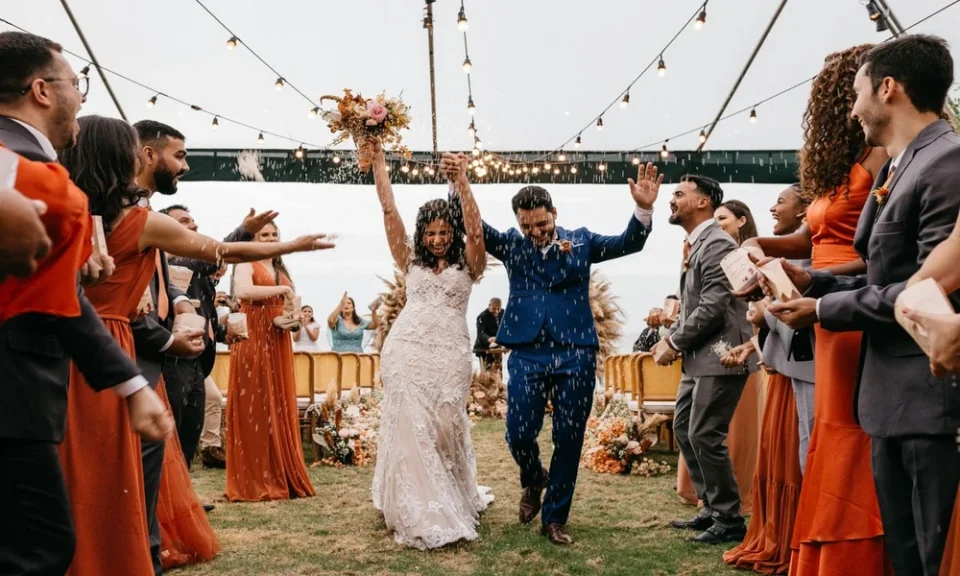
There’s a particular kind of exhaustion that only wedding planning produces. It’s not the tired-after-a-long-day kind. It’s the tired that comes from holding fifteen decisions in your head at once – the caterer’s follow-up email, the seating chart nobody can agree on, the dress that still needs a final fitting – while also trying to remember that this is supposed to be one of the happiest stretches of your life. Most couples feel that tension at some point. Very few talk about it openly, which is a shame, because naming it tends to make the whole process a lot more manageable.
The wedding industry, understandably, sells the highlight reel: the dress reveal, the first dance, the perfectly lit toast. What it doesn’t sell as well is the eighteen months beforehand, where most of the actual work happens in spreadsheets, group chats, and slightly tense phone calls with venues. Planning well isn’t really about avoiding stress altogether – that’s not realistic – it’s about building a process that doesn’t quietly wear you down before the day even arrives.
Decide What Actually Matters to You Two
Every wedding has a handful of things that genuinely matter to the couple, and dozens of things that only feel important because everyone else seems to be doing them. The trick – and it really is a skill worth practising early – is figuring out which is which before the budget gets spent. Maybe the photography matters enormously and the flowers can be simple. Maybe live music is non-negotiable and the favours can disappear entirely without anyone noticing. Getting clear on this early saves an enormous amount of second-guessing later, and it gives you permission to spend generously on the things you’ll actually remember and skip the ones you won’t.
Outfits: Enjoy the Process Instead of Rushing It
Dress shopping has a way of becoming stressful fast, especially for bridesmaids or younger family members trying to find something formal for the rehearsal dinner or engagement party without knowing where to start. A good guide makes a genuine difference here. Prom Dress Finder‘s guide to choosing a dress is written for exactly this kind of formal-dress decision-making – working through fit, colour, and silhouette systematically rather than trying on forty dresses at random and hoping one clicks. The same logic applies whether it’s a prom dress or a wedding-adjacent formal look: know your shape and priorities before you start browsing, and the whole process gets far less overwhelming.
Protect Your Actual Wellbeing, Not Just Your Timeline
It’s easy to treat the months before a wedding purely as a logistics project – a checklist to clear rather than a season of life to actually experience. But the body keeps score of prolonged stress whether or not the to-do list gets finished on time, and couples who skip sleep, skip meals, and skip downtime in the run-up to their wedding often arrive at the day itself running on fumes rather than joy. We’ve written before about building a genuinely practical self-care for exactly this kind of stretch – small, repeatable habits like proper exfoliation, breathwork, and simply allowing yourself an off day when your body asks for one, rather than pushing through on adrenaline until the wedding week finally arrives.
If planning stress has genuinely crept past “a bit much” into something heavier, it’s worth taking seriously rather than white-knuckling through it. Mayo Clinic’s guide to stress management basics is a solid, non-alarmist starting point for understanding what’s actually happening in the body during a prolonged high-stress period, and what genuinely helps versus what just feels like it should.
Delegate Early, Not When You’re Already Drowning
Most couples wait too long to hand things off. There’s a pattern worth watching for: a task starts small, gets pushed to “next week” a few times, and by the time it’s finally addressed it’s become a fire drill two weeks before the wedding. Bridesmaids, parents, and close friends are usually far more willing to help than couples assume – they’re just waiting to be asked something specific rather than a vague “let me know if you need anything.” Give someone the seating chart, someone else the vendor confirmations, and the mental load drops dramatically, even if the total amount of work stays roughly the same.
Capturing Memories Without Chasing Everyone Afterward
Professional photos cover the formal moments beautifully, but the photos guests take on their own phones – the ones taken mid-laugh, mid-toast, completely unposed – often end up being the ones a couple treasures most a year later. The problem is collecting them; they scatter across dozens of phones and rarely make it further than someone’s camera roll. Setting up a shared album through something like Wedding Photo Swap solves this cleanly: guests upload as the day unfolds, and the couple ends up with a proper, varied archive instead of sending a dozen “hey, did you get any photos of us?” messages weeks after the honeymoon.
The Day Itself Will Never Go Exactly to Plan
However carefully a timeline is built, something will run late, someone will be missing at photo time, and the weather may have opinions of its own. This is normal, and it’s rarely the disaster it feels like in the moment. Couples who build in slack – extra time here, a backup plan there – tend to look back on their wedding day with far more warmth than couples who treated the schedule as something that had to run perfectly to count as a success. The moments people actually remember are almost never the ones that went exactly to plan; they’re the unscripted ones nobody could have written into a timeline anyway.
Weddings are, at their core, one long exercise in prioritising what genuinely matters over what merely looks impressive. Get that right, take care of yourself along the way, and the actual day tends to take care of itself far more easily than the planning process ever suggested it would.
