
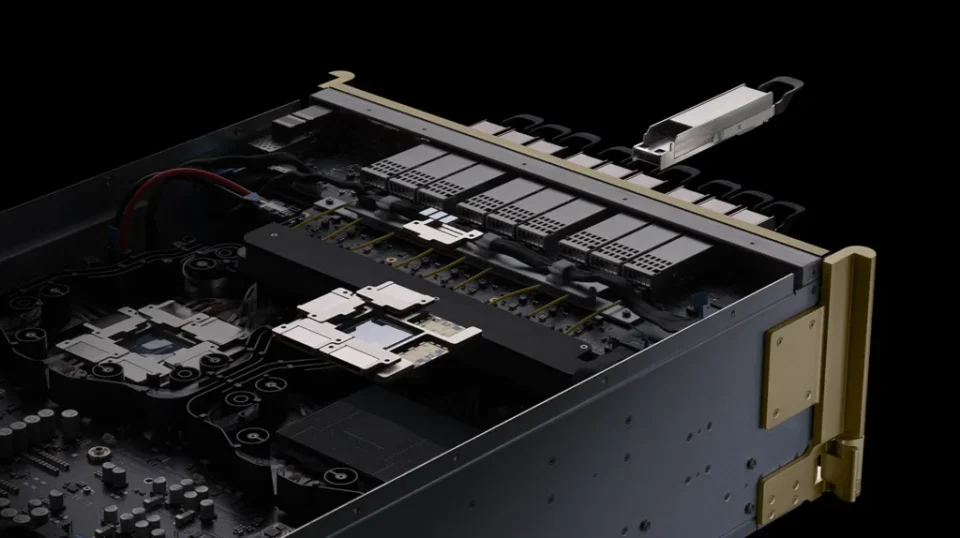
Copackaged optics is a technology whose emergence follows a pattern that students of innovation will recognise immediately. A dominant architecture sustains a field through successive generations of incremental improvement, until the demands placed upon it grow faster than its fundamental limitations allow. At that point, a structural change becomes inevitable, not because engineers have run out of ideas for improving the existing approach, but because the physics constraining it cannot be negotiated away. The transition underway in high-speed data transmission from pluggable optical transceivers to integrated copackaged architectures is exactly that kind of structural change, driven by the relentless growth in data centre bandwidth demand and the physics of electrical signal propagation at high frequencies.
Why the Old Architecture Reached Its Limits
To understand where copackaged optical technology is going, it helps to understand clearly why the previous approach ran into trouble. Pluggable transceivers, the modules that convert electrical signals to optical for transmission over fibre, have served data centres well for two decades. They can be individually replaced, upgraded, and sourced from multiple vendors. That flexibility made them the default solution for a long period during which data rates per port grew steadily but not explosively.
The problem is that pluggable transceivers are connected to the switching silicon by electrical traces running across a printed circuit board. Those traces have bandwidth limitations that are governed by the frequency-dependent losses of the conductor material, the substrate, and the connectors involved. As lane rates pushed above 50 gigabits per second and toward 100 and beyond, those losses required increasingly complex and power-hungry equalisation circuits on both ends of the electrical channel to maintain signal integrity. The SerDes circuitry performing that equalisation became one of the dominant power consumers in high-speed switch designs.
The constraints are additive. Higher data rates require more equalisation. More equalisation requires more power. More power generates more heat. More heat must be managed by more aggressive cooling, which itself consumes power and infrastructure. Integrated copackaged optics breaks that cycle by eliminating most of the electrical channel length between the switch silicon and the optical engine.
The Core Trend: Convergence of Optical and Electronic Functions
The defining trend in copackaged optics development is the progressive integration of optical and electronic functions that were historically separated by physical distance and incompatible manufacturing processes. Bringing photonic components into the same package as switching silicon is not merely an assembly decision. It is an architectural convergence that changes the economics and performance characteristics of the entire interconnect chain.
The trends driving this convergence include:
Rising Lane Rates
Each successive generation of switching silicon increases the number of high-speed SerDes lanes and the data rate per lane. At 200 gigabits per lane and above, the electrical channel from switch to pluggable cage becomes extremely difficult to manage with acceptable power and signal integrity
Bandwidth Density Pressure
Data centre operators need more bandwidth per rack unit and per watt. Co-packaged optical interconnects deliver higher aggregate bandwidth within the switch footprint by removing the front-panel cage area constraint that limits pluggable architectures
Power Efficiency Imperatives
Hyperscale data centre operators are under sustained pressure to reduce power consumption per unit of bandwidth. The 30 to 50 per cent reduction in optical interconnect power that copackaged architectures enable is a commercially significant advantage at scale
Silicon Photonics Maturation
The development of silicon photonics platforms that integrate optical modulation, detection, and routing functions on CMOS-compatible substrates has made it feasible to manufacture optical engines at the volumes and cost points that data centre applications require
Standardisation Progress
Industry working groups have developed interoperability specifications that allow optical engines and switch silicon from different sources to be integrated, reducing the lock-in risk that early copackaged architectures posed for system designers
Singapore’s Position in the Copackaged Optics Transition
Singapore has positioned itself within the supply chains supporting copackaged optics at the precision packaging and photonic integration level. The country’s semiconductor packaging industry, which has served the broader electronics sector for decades, is applying its advanced packaging capabilities to the assembly challenges that co-packaged optical systems present.
Achieving the submicron optical alignment tolerances required for efficient coupling between photonic integrated circuits and fibre arrays demands precision assembly processes that Singapore’s manufacturing ecosystem is well equipped to support. Research institutions and industrial manufacturers are active in photonic packaging development, working on passive and active alignment techniques, adhesive bonding, and thermal management approaches that copackaged implementations require.
Singapore’s strategic investment in photonics as a growth sector within its advanced manufacturing portfolio reflects a clear assessment of where global data infrastructure demand is heading. The country’s combination of semiconductor packaging expertise, precision engineering capability, and research investment in photonic integration makes it a credible participant in the supply chain that will manufacture copackaged optical components at scale.
The Trajectory and What It Means
Technologies develop in response to the problems civilisation needs to solve, and the problem that advanced copackaged optics addresses, delivering the bandwidth that a data-intensive global economy requires at power consumption levels that are physically and economically sustainable, is not diminishing. If anything, the growth in artificial intelligence workloads, cloud computing demand, and real-time data processing across every sector of the economy is accelerating the bandwidth requirements that make conventional pluggable architectures increasingly inadequate.
The transition to copackaged architectures is not a question of whether but of pace and sequence, which applications adopt it first, which manufacturing challenges are resolved soonest, and which supply chain participants are best positioned to serve the programmes that move earliest. For engineers, investors, and manufacturers tracking the future of high-speed data infrastructure, that transition is the central story. It begins and ends with copackaged optics.
