
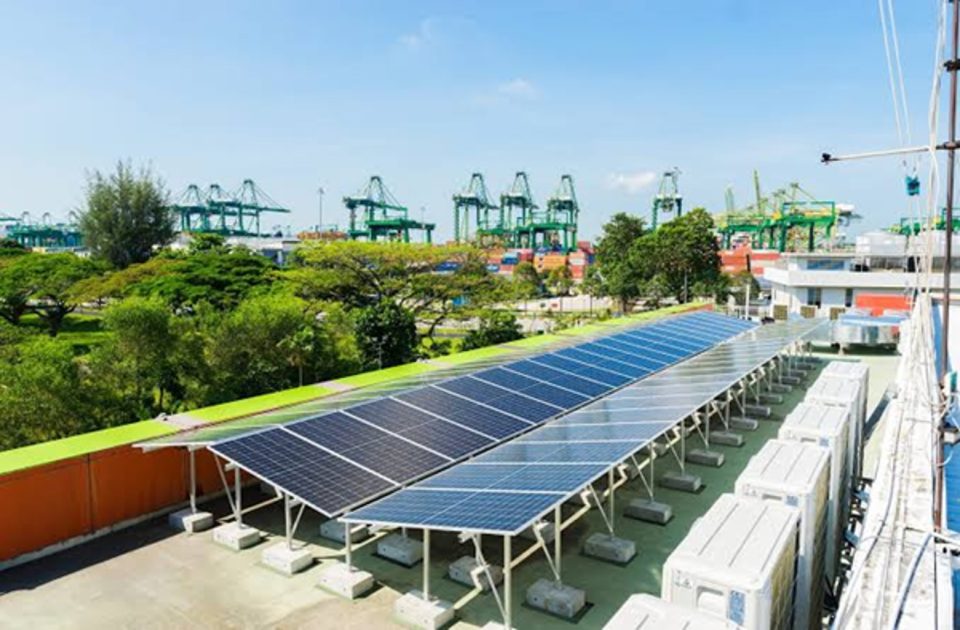
Solar panels are perhaps the most environmental-conscious inventions considering it absorbs energy from the sun, an infinite source, and doesn’t contribute to the carbon emission, responsible for the most severe damage to the environment. Many industries are switching because apart from being an eco-friendly option, industrial sonal panel Singapore also helps in cutting costs on energy consumed by industries to operate.
Many still don’t know that there are types of industrial solar panels to choose from, each with its own distinctive feature. If you are among the masses, we will explain the most common types generally installed by industries.
Monocrystalline
Monocrystalline is the top choice for many industries and is made using a single high-purity silicon ingot with a pyramid pattern. It absorbs solar energy at a higher rate and can last for 30 years even in extreme weather conditions. It features a sleek design, which makes it ideal for installation in a limited space, and that is why many manufacturing units pick it for rooftop installation.
Polycrystalline
Entirely opposite to monocrystalline solar panels, polycrystalline panels feature multiple silicon fragments, but absorb and convert energy at a faster rate. Industries and manufacturing units choose it because it costs less but has slightly lower efficiency when compared to monocrystalline. Even as a less powerful option, it can power large-scale industries and is better installed in open space to harness solar energy.
Thin-Film
Another very common pick for solar panels by industries is thin-film because of being flexible and lightweight, making it a great choice for curved surfaces and weaker roofs. These are also affordable and require fewer materials for installation, but produce significant power needed by large-scale industries like construction sites.
PERC (Passive Emitter and Rear Cell)
It is an upgraded version of monocrystalline panels, but has a light-trapping rear layer, boosting efficiency by 12%. They are efficient in preventing heat buildup and reducing rear recombination, and with a few panels installed, they can produce the same amount of energy as the traditional ones. They are ideal for industries with the need to produce more energy.
These are the most common ones that we have discussed, and there are more types available in the market to suit the diverse needs of industries looking for different energy-producing capacities.
