
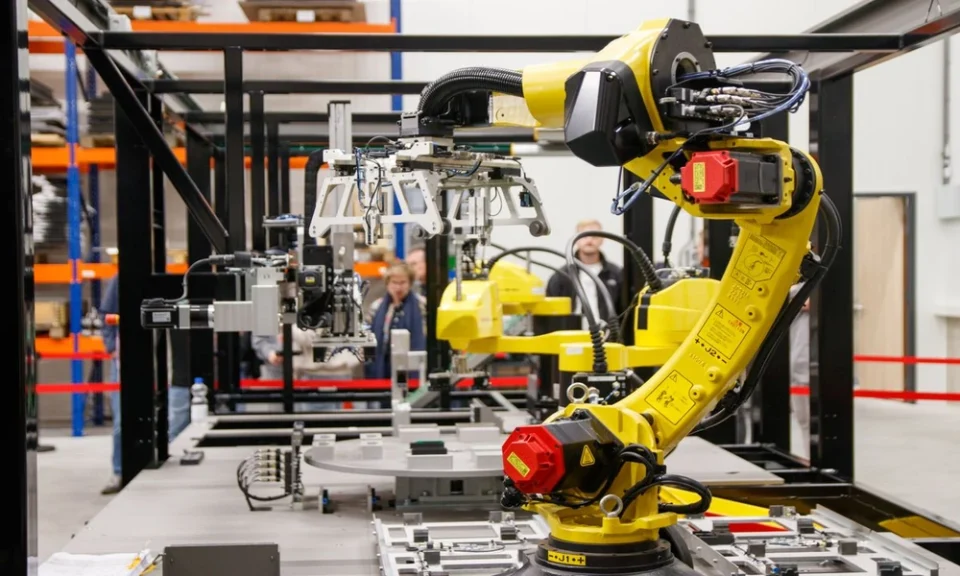
Stand next to a production line long enough and you start to notice something odd. A huge amount of the work isn’t assembling anything at all – it’s checking. Checking that a label sits straight. Checking that a weld hasn’t cracked. Checking that the right component ended up in the right slot before the whole thing gets sealed inside a housing where nobody will ever see it again. Inspection is unglamorous, endless, and absolutely critical, and for most of manufacturing’s history it’s been done by a person with good eyesight and a lot of patience.
That’s changing. Not overnight, and not everywhere, but steadily enough that it’s worth understanding what’s actually different about the current wave of vision technology, rather than assuming it’s just “cameras that check things,” which is what quality control has technically been doing for decades anyway.
It’s Not Just a Camera With Extra Steps
Older machine vision setups worked on rules. A programmer would sit down and specify, explicitly, what counts as a pass and what counts as a fail – this many millimetres of tolerance, this exact colour range, a barcode that scans cleanly or it doesn’t. Rigid, but predictable. The trouble is that real-world defects don’t always fit neatly into pre-written rules. A hairline crack that curves slightly differently than the training examples. A surface blemish that’s cosmetically fine but structurally worrying. Rule-based systems either miss these or flag so many false positives that operators start ignoring the alerts entirely, which defeats the purpose.
Modern systems approach the problem differently. Rather than being told exactly what a defect looks like, they’re shown thousands of labelled examples and learn the pattern themselves – including, sometimes, patterns nobody explicitly programmed in. This is the real shift behind the phrase “industrial vision system,” as distinct from the older machine vision label: it’s less a camera bolted to a conveyor and more an integrated stack of optics, lighting, and trained inference working together. Companies like Industrial Vision Systems build precisely this kind of setup – designing the physical inspection rig alongside the model that interprets what it sees, because getting either half wrong on its own tends to sink the whole deployment.
The Boring Part Is Where the Value Actually Lives
Nobody gets excited pitching a lighting rig. But ask anyone who’s actually deployed one of these systems and lighting is usually the first thing they’ll complain about – get it wrong and even the best-trained model starts seeing shadows as defects, or missing real ones washed out by glare. Camera angle, lens choice, the exact wavelength of light bouncing off a metallic surface – this is where projects quietly succeed or fail, long before anyone touches the software.
The training data matters just as much, and it’s rarely as tidy as a sales demo suggests. A model trained on pristine sample parts photographed in a lab tends to fall apart on a real line, where dust accumulates on lenses, lighting shifts through a shift change, and product batches vary more than anyone accounted for during the pilot phase. The plants that get real value out of vision systems are usually the ones willing to keep retraining and recalibrating well after the initial install, treating it as an ongoing process rather than a one-off purchase.
Catching Problems Earlier, Not Just at the End
Final inspection gets most of the attention, but the more interesting deployments happen earlier in the line. Verifying a robotic arm picked the right part before it’s placed. Confirming an assembly step happened in the correct sequence before the next station begins. Catching a fault at station three instead of at the end of the line saves real money – the part hasn’t had five more operations added to it yet, none of which need to be scrapped.
There’s also a quieter benefit that doesn’t show up on the first ROI spreadsheet: traceability. Regulated sectors – automotive, pharma, aerospace – increasingly need to show not just that a part passed, but exactly which images and model version made that call. A vision system produces that record automatically, as a byproduct of doing its job. That’s the sort of thing that turns a recall investigation from “shut down the whole product line while we figure this out” into “we know exactly which batch and shift this affects.”
The People Still Standing at the Line
Automated inspection doesn’t remove people from the floor as completely as the marketing sometimes implies. Someone still needs to monitor stations, handle exceptions the system flags, and physically manage the parts moving through – and those roles come with their own, very old, very human problem: standing in one place doing repetitive work for eight hours is genuinely hard on the body. It’s worth remembering that even as inspection itself gets automated, the operators working alongside it still need proper ergonomic support. We’ve covered this before in the context of anti-fatigue mats and standing-desk setups, which are just as relevant on a production line as they are in an office – small, unglamorous changes that noticeably reduce fatigue over a full shift.
Where This Is Heading
The next meaningful shift is processing happening right at the camera rather than shipping every frame to a central server. That cuts the delay between “defect spotted” and “line stops” down to something fast enough to actually intervene, rather than just logging the problem after the part has already moved on. Combined with cheaper sensors, it’s also opening the door for smaller manufacturers who previously assumed this kind of technology was reserved for automotive-scale operations.
For a broader, vendor-independent view of where the wider automation and machine vision field is headed – standards, certification, the industry ecosystem this technology sits inside – the Association for Advancing Automation’s vision and imaging resources are worth a look, independent of any single supplier’s pitch.
None of this replaces solid engineering fundamentals. Good lighting, sensible camera placement, training data that actually reflects the messy reality of a working plant rather than a tidy demo reel. But for manufacturers still relying purely on a person’s eyesight after hour seven of a shift, the argument for making the change keeps getting harder to push back on.
